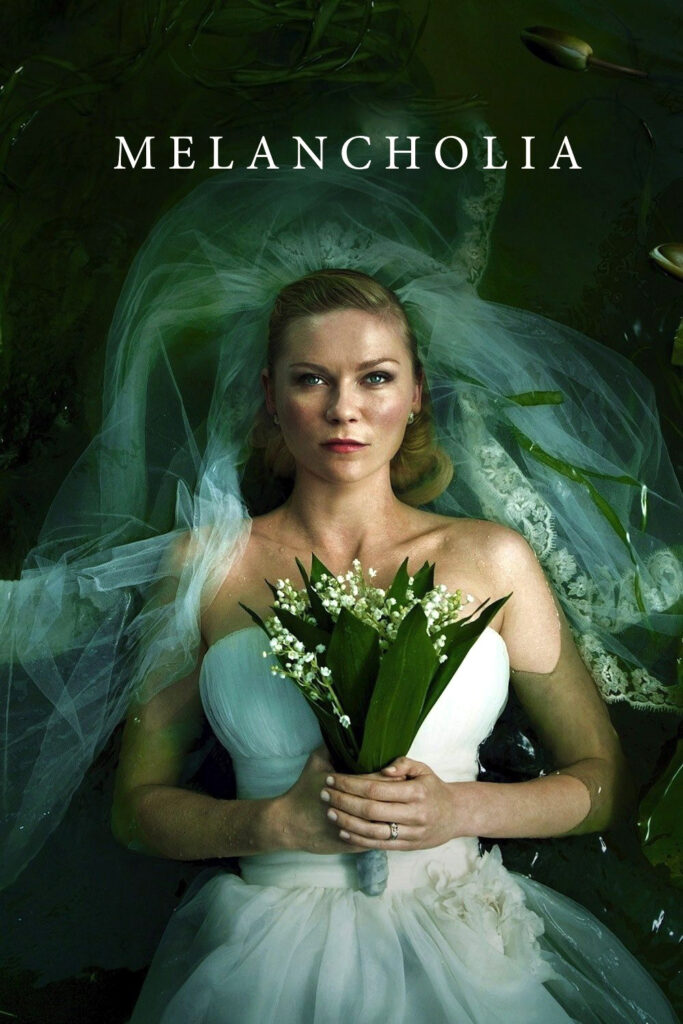
There’s nothing lonelier
than feeling doomed
when everyone around
you is happy.
The Double Meaning of Melancholia
Thoughts by Jen Howell
In 2017, fresh out of a months-long episode of severe anxiety and depression, I visited the National Air and Space Museum with my husband. Among the famous planes and space modules was a wall display talking about the possibility of a meteor hitting, and possibly destroying, the Earth. This was something I’d known could happen intellectually, but in that moment it hit me on a visceral level.
The idea of planetary elimination is much more terrifying than death, because it’s also the death of any human creation that preceded you or any legacy you might leave behind. It’s the reason figures as spiritually and politically disparate as Octavia Butler and Elon Musk have said that we must become a multi-planetary species. The challenge of finding meaning in a world where everything could disappear in an instant hit me in a moment of paralyzing shock. Director Lars von Trier brings that same awareness and shock to his 2011 film “Melancholia”, but somehow he presents it with a side of strange beauty and wonder.
“Melancholia” is a title with a double meaning. On the one hand it refers to the deep depression the main character Justine (Kirsten Dunst) is experiencing. On the other hand it’s the name of a blue planet which will have destroyed Earth by the end of the movie. Von Trier begins his film with a montage “overture” of beautiful, often symbolic images set to Wagner’s prelude to “Tristan and Isolde.” This overture links the events on Earth to those in space.
The first part of the movie is earthbound, and largely explores Justine’s fall into a depressive episode during the reception for her lavish wedding to Michael (Alexander Skarsgård). The couple arrive in a happy mood, and Justine quickly finds out she’s also being promoted at work. But cracks begin to show when her parents fight during a wedding toast, and soon Justine’s forced smiles turn into a retreat from the festivities, and eventually impulsive behavior that blows up both her new marriage and her job. The trouble brewing in the universe is only a speck in the distance at this point in the story, and human drama, from serious to trivial, dominates the narrative. At the most trivial level, Von Trier highlights a member of the event staff, upset that no one wants to know the results of a guessing game about how many beans are in a bottle. It’s clear that the beans are not important in the face of the wedding drama, but later in the movie the audience is forced to question what is important in the face of planetary destruction?
The middle of the movie deals with Justine’s further descent into depression, where she is no longer able to take care of basic functions like washing and eating. At one point Justine says, “I’m trudging through this gray woolly yarn. It’s clinging to my legs. It’s really heavy to drag along” – an image Von Trier also depicts in the overture. Kirsten Dunst rightly won the Best Actress award at Cannes for her realistic depiction of severe mental illness.
The final third of the movie is where space begins to impact life on earth. Justine’s sister Claire (Charlotte Gainsbourg) must deal with looming anxiety about the approach of the planet Melancholia, even as her husband John (Kiefer Sutherland) cheerfully anticipates it, helping their son Leo (Cameron Spurr) watch it through a telescope. John believes in an optimistic universe where things turn out for the best, and humans control their environment. Throughout the film he regards Justine’s depression with disgust and incomprehension. He can’t imagine that she can’t pull herself out of it.
It is when Melancholia becomes an imminent threat rather than a scientific wonder that the characters flip places. Claire, who was her sister’s caretaker, falls into a panic. John, his optimism and faith in human dominance shattered in an instant, takes an early exit. And Leo, as children do, looks for reassurance. He finds it in his aunt, who while she sometimes has harsh words for others, creates the idea of a magic cave they’ll build to escape the destruction.
As a person who’s experienced depression, this ending, where Justine becomes the caretaker and guide, really resonated with me. There’s nothing lonelier than feeling doomed when everyone around you is happy. But when people around you begin to see the dark corners of the world, it creates a kind of communion. In the final part of the film Justine’s family enters her world (or perhaps Justine’s “world”, Melancholia, enters theirs). Because of this, Justine is able to act as a guide and protector for her sister and nephew in the last moments of their existence. Having spent her life in the dark, Justine knows how to provide the light.
American science fiction seems to have several strains when it comes to space. In one, we are explorers and masters of the universe, able to overcome any problem we might encounter, even planetary destruction, through technology and teamwork. Another strain pictures us as facing an alien world full of forces we can’t understand, let alone control. “Melancholia” is in some ways one of the darkest of this latter variety, since there are no survivors. In space, according to the famous tagline for “Alien”, “no one can hear you scream.” According to Von Trier’s film, there’s also no one out there to care if they could hear you. As Justine says to her sister in a less charitable moment: “The earth is evil. We don’t need to grieve for it… Nobody will miss it.”
Whether you take those words as your parting message from “Melancholia” or you focus on the more serene image of Justine, Claire, and Leo holding hands in their “magic cave”, I think most people should be able to find something valuable in this film. In the best of all worlds, it may help people fully appreciate the precarity and preciousness of our planet at a time when we most need to work together to preserve it.